
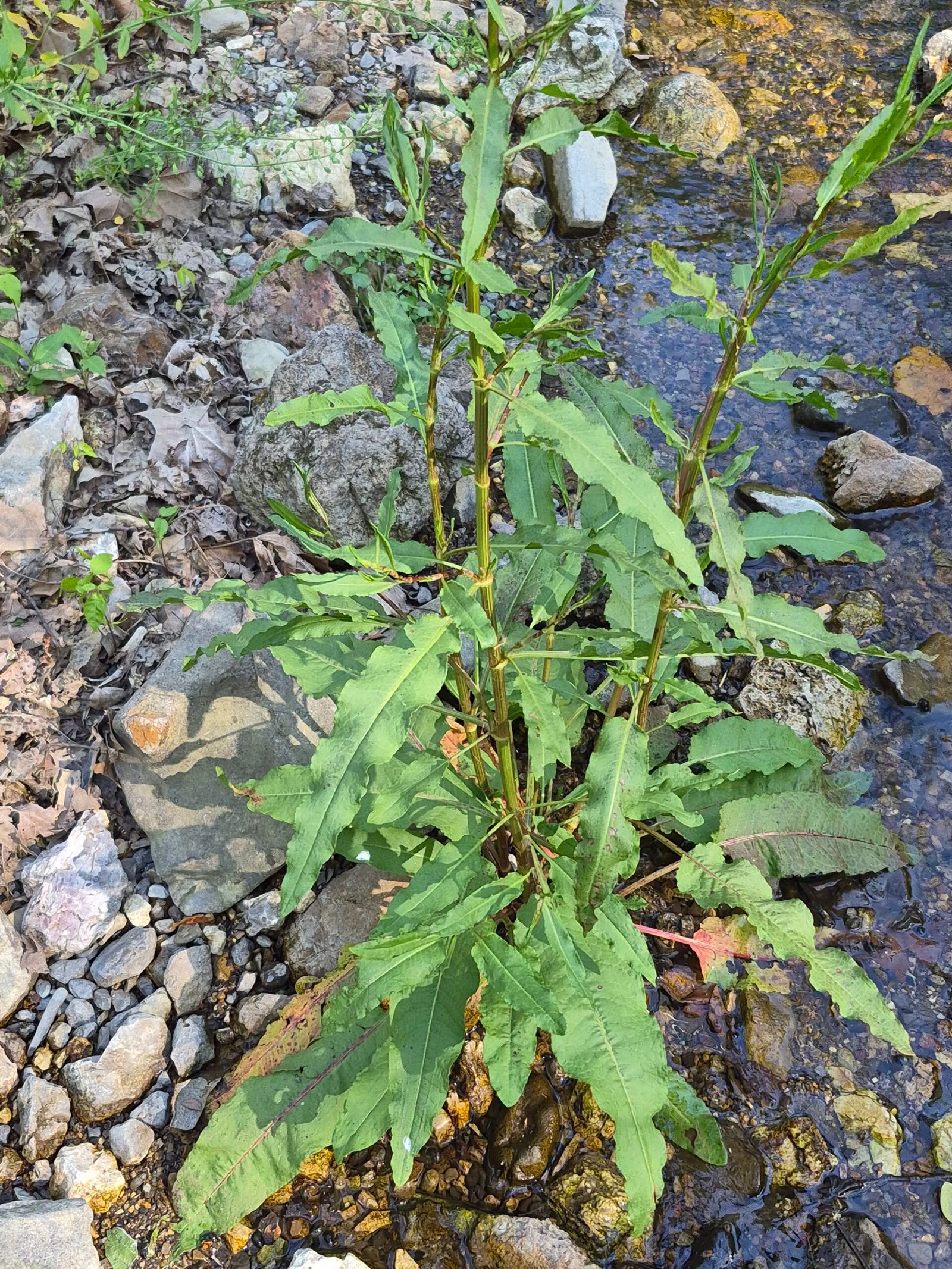
Different species of dock (Rumex) share many medicinal qualities, particularly their cleansing and laxative properties, but each has a slightly different “claim to fame” in herbal medicine.
| Species | Common Name | Best Known Medicinal Benefit | Distinguishing Characteristics |
|---|---|---|---|
| Rumex crispus | Curly Yellow Dock | Blood Builder & Liver Tonic: Most famous for addressing iron-deficiency anemia and stimulating liver detoxification. | Narrow, wavy leaves: Edges are strongly “curled” or crisped. Leaf base tapers into the stalk. |
| Rumex obtusifolius | Broad-leaved Dock | Topical Soother: Renowned in folklore for neutralizing nettle stings and soothing insect bites when applied as a crushed leaf poultice. | Wide, shield-shaped leaves: Up to 6″ wide; heart-shaped at the base. Seed wings have distinctly toothed edges. |
| Rumex sanguineus | Red-veined Dock | Circulatory Support: Often used for its antioxidant properties and traditionally believed to improve blood circulation. | Bright red veins: Very dark green leaves with striking red or purple veins. Often grown in gardens for color. |
| Rumex occidentalis | Western Dock | Skin Brightener: Clinical trials have shown it is effective at reducing hyperpigmentation and fading dark spots. | Massive size: Can reach 6 feet tall. Leathery leaves with no “tubercles” (the tiny bumps usually found in dock seed clusters). |
| Rumex alpinus | Alpine Dock | Digestive Cleanser: Historically known as “Monk’s Rhubarb,” it is valued for its gentle laxative effect and was traditionally used to treat jaundice. | Rhubarb-like: Large, broad-ovate leaves. Often found in high-altitude, moist meadows. |
| Rumex dentatus | Toothed Dock | Anti-Inflammatory: Widely utilized in Eurasian folk medicine for treating skin diseases like eczema and managing body pain or dislocated bones. | Toothed seed wings: Similar to broad-leaved dock but smaller, with even more prominent teeth on the tiny seed pods. |
Important Common Features
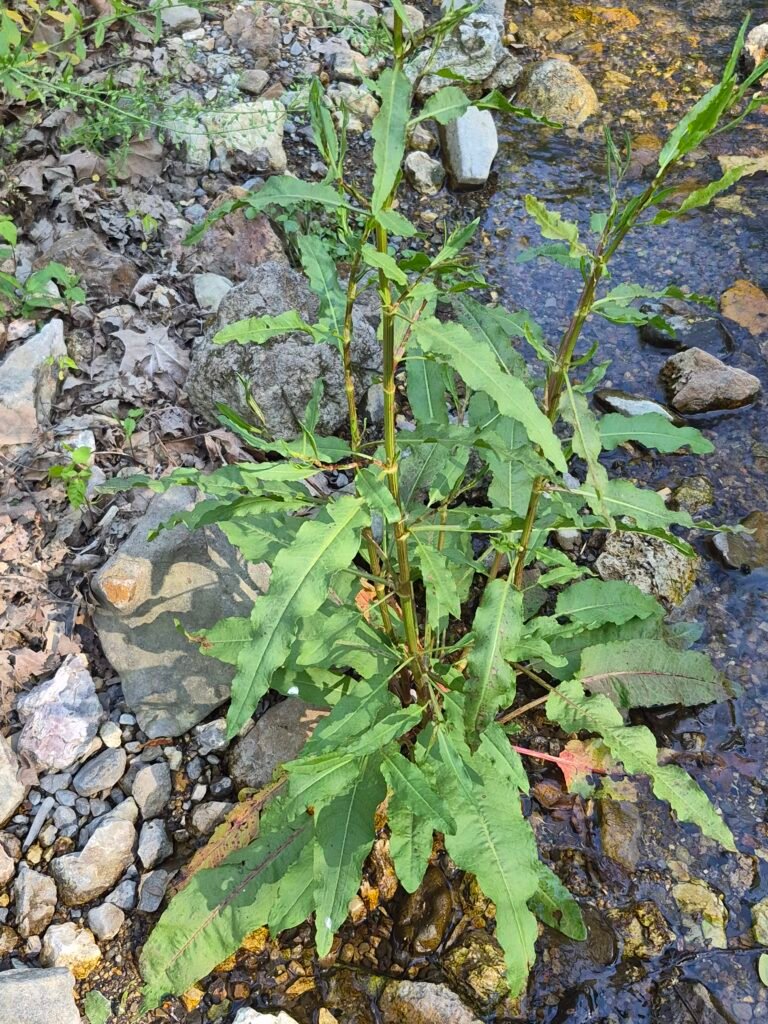
Roots vs. Leaves: In most species, the roots are the primary part used for internal medicinal tonics (like laxatives and blood purifiers), while the leaves are more common for topical relief or nutritional use.
Oxalic Acid: All docks contain oxalic acid, which can be toxic in large amounts. It is generally recommended to cook the leaves to reduce this acid content before consumption.
Herbalist’s Application: Putting Dock to Work
Internal Use: Tonics & Traditions
Because the roots are dense and woody, a simple tea steep isn’t enough to pull out the medicinal properties. You need to use a Decoction or a Menstruum (solvent).
- The Iron-Rich Decoction: To address iron deficiency or stimulate the liver, simmer 1–2 teaspoons of dried Curly Yellow Dock root in 2 cups of water for 15–20 minutes. This “low and slow” heat breaks down the tough root fibers.
- Mineral-Infused Vinegar: Since oxalic acid is neutralized by heat, but iron and other minerals are easily extracted by acid, try an infused vinegar. Chop fresh roots, cover with apple cider vinegar, and let sit for 4 weeks. Use this as a daily “blood-building” tonic on salads.
External Use: Field First Aid
For skin issues, the leaves and roots serve different purposes depending on the species.
- The “Spit Poultice” for Stings: If you run into stinging nettles, look for Broad-leaved Dock nearby. Crush a fresh leaf (or chew it slightly) to release its juices and apply it directly to the sting for near-instant relief.
- The Skin Brightening Wash: For hyperpigmentation or dark spots, a strong cooled decoction of Western Dock root can be used as a daily facial wash.
Harvesting for Success
- The Best Roots: Harvest in late autumn after the first frost or early spring before the flower stalk appears. This is when the plant’s energy and nutrient density are concentrated underground.
- The Best Leaves: For culinary use, harvest the “tight” young leaves in the center of the rosette. Always cook dock leaves in at least one change of water to reduce the oxalic acid content and soften the flavor.
Harvesting Timeline
| Plant Part | Best Harvest Time | Reasoning |
|---|---|---|
| Young Leaves | Early Spring (March–May) | Best for eating; they are tender and less bitter before the plant sends up a flower stalk. |
| Flower Stalks | Late Spring (May–June) | Stalks can be peeled and eaten like rhubarb or green beans before they become woody. |
| Seeds | Late Summer / Autumn | Harvest when they turn rusty brown and papery to grind into a mineral-rich, high-fiber flour. |
| Roots | Autumn (Sept–Nov) | Energy and medicinal properties move down into the roots as the leaves die back for winter. |
Pro-Tips for Foragers
- The “Second Spring”: Many docks, such as curly dock, put out a second round of fresh growth in October or November after the heat of summer fades, providing a rare autumn window for tender greens.
- Root Quality: For the highest medicinal potency, harvest roots in the autumn of the plant’s first year or the early spring of its second year. Avoid harvesting roots when the plant is actively flowering, as it depletes the root’s energy.
- Preparation: If you are using roots for iron tonics, experts like those at The Herb Peddler recommend using them fresh for syrups or finely chopping and drying them immediately to prevent mold.
A Final Thought from the Ranch
While these plants are often dismissed as mere weeds, they are among the most versatile tools in a traditional naturopath’s kit. Whether I’m using Broadleaf Dock for neutralizing stinging nettle stings or harvesting Curly Yellow Dock to support my own health, I always keep a jar of dock root vinegar aging in the apothecary. On our ranch, this is more than just a kitchen staple—it’s a vital resource for our goats. When the barberpole worm season hits and anemia becomes a threat, having that iron-rich vinegar on hand provides a natural, effective way to help our herd recover and stay strong.
Next time you see a dock plant “taking over” a corner of your field, I hope you see a friend instead of a foe. Which variety do you find most often on your land? Feel free to comment below.